







 Share on X
At the Twelve Tribes Community in Kingston, Ontario, I saw what modern retirement often lacks
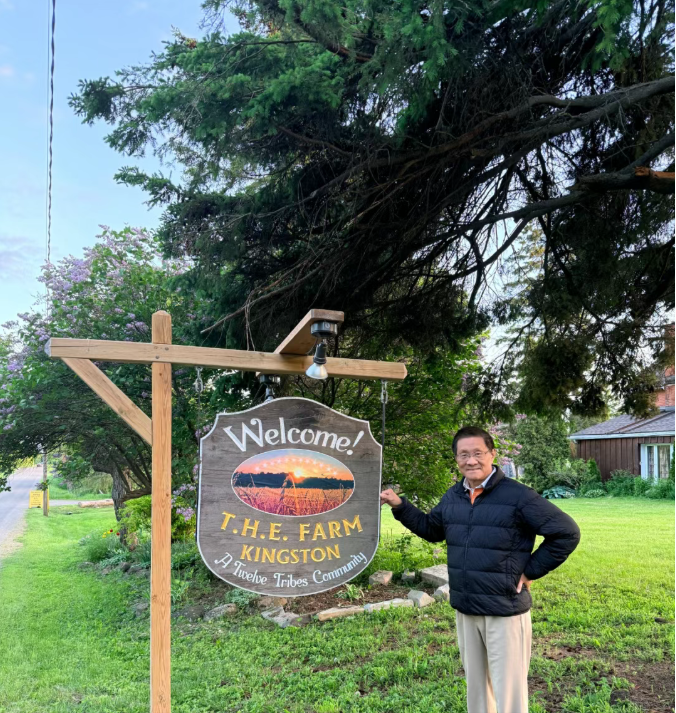
T.H.E. Farm, Kingston, Ontario
On the evening before leaving Kingston, Ontario, Canada, I sat alone on a grassy slope outside the farm.
In June, daylight lingers long in Canada. Even after eight o’clock in the evening, the sun still hung above the horizon, bathing the distant woods, meadows, and wooden houses in a warm golden glow. Sheep slowly returned from the pasture. Children chased newborn lambs across the grass. The aroma of freshly baked bread drifted from a nearby cabin. Someone sat at a doorway playing guitar; others prepared dinner or chatted on wooden benches. The entire farm felt like a living oil painting.
At that moment, I felt strangely detached from reality.
I knew that in one more day I would return to the fast-moving world—to airports, highways, ringing phones, endless meetings, emails, and news alerts. Yet life here would continue at its own pace.
This was my second visit to the Twelve Tribes Community.
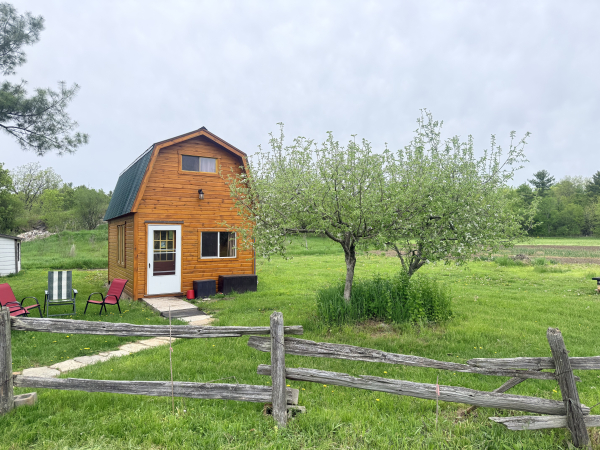
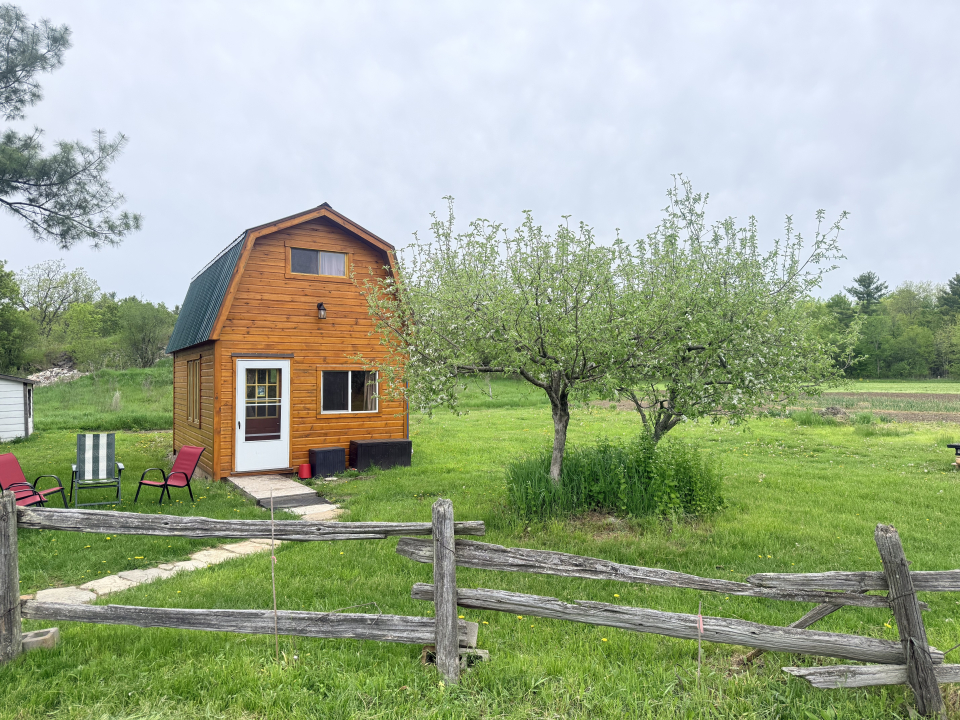
A small wooden cottage in the green fields of the Kingston farm.
My first visit was during the winter of 2023. Heavy snow covered the farm. Smoke rose from cabin chimneys, and real wood burned in fireplaces, warming the rooms against the Canadian cold. People gathered around the fire, sharing reflections and singing hymns whose melodies lingered in the air.
One snowy afternoon, my friend Jack Zhang and I wandered into the community out of curiosity. We were warmly welcomed and invited to dinner. We expected to pay, but no payment was accepted. What began as a brief visit turned into more than two months of living together. The Chinese dishes we prepared became popular among the community members.
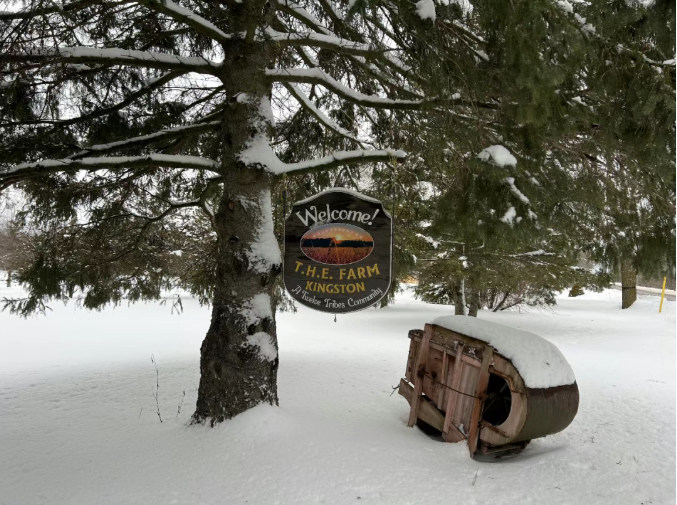
The farm entrance during my first winter visit.
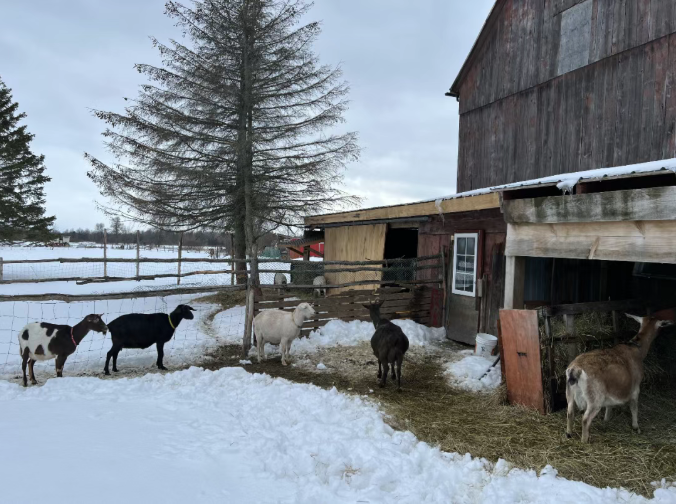
The barn and animals in the snow-covered winter landscape.
The Twelve Tribes Community embraces a simple way of life. Founded during the counterculture movement of the 1970s, its founder, Gene Spriggs, believed that modern churches had drifted away from the model described in the Book of Acts. He sought to rebuild a community where believers would live together, work together, share possessions, raise children collectively, worship daily, and eat together. Their first Yellow Deli restaurant became the primary source of income.
By the 1990s, the movement officially adopted the name “Twelve Tribes,” inspired by the twelve tribes of Israel. Members believe they are preparing for the restoration of the early church and the return of the Messiah.
Three years later, I returned and spent another two weeks living and working alongside them. Many familiar faces had moved to other communities across Canada and the United States, while new members had arrived from around the world.
What had not changed was the way of life, and the peaceful joy visible on people’s faces.
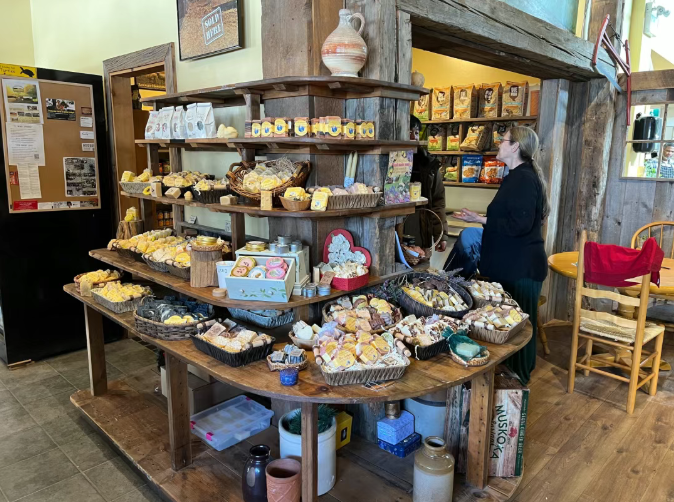
The Yellow Deli store display, filled with handmade food and goods.
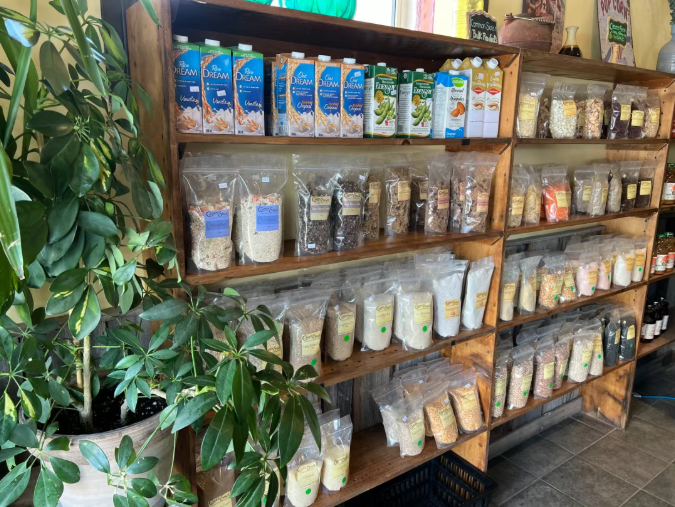
Farm products and dry goods on the shelves.
In a world that keeps accelerating, the farm seemed to move by another kind of time.
The greatest surprise during my first visit was not the farm, the faith, or the lifestyle. It was the silence—a kind of silence that has become rare in modern society.
There were no television news broadcasts, no short videos, no stock prices, no cryptocurrency crashes, no social media arguments, and often no smartphones. I would instinctively reach for my phone, only to realize there was no signal and no urgent message requiring attention.
Slowly I began to hear sounds I normally ignored: the wind through the trees, sheep grazing, the creaking of wooden floors, distant laughter from children, and even my own heartbeat.
One morning at six o’clock, I awoke to the sound of hymns accompanied by a harp. Outside, a woman in her seventies walked slowly past the dormitory, gently singing while playing. Sunlight filtered through the trees and the air carried the scent of soil and morning dew.
It reminded me of summers in rural China during my childhood. There were no smartphones, no internet, and no endless information streams. Time seemed slower. Neighbors gathered together in the evenings, slept outdoors beneath the stars, listened to insects singing, and shared stories passed down through generations.
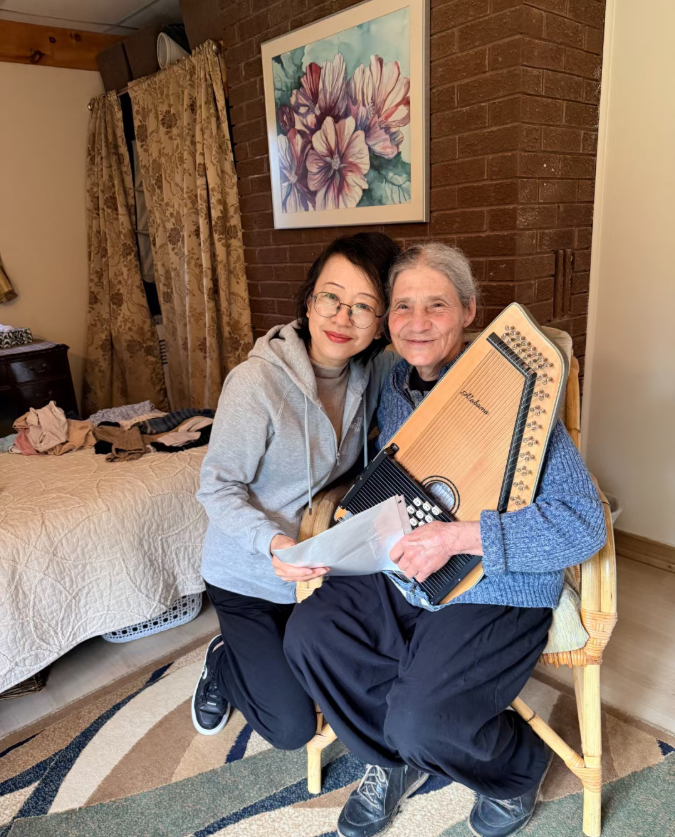
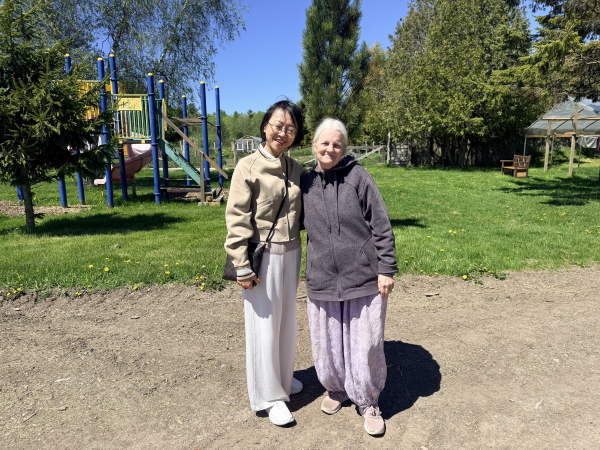
The elderly harp player whose morning hymns became the emotional center of the visit.
After breakfast, everyone began their daily work. Some tended vegetables in greenhouses, others cared for goats and sheep, baked bread, made cheese, or worked in the Yellow Deli. The community functioned like a living organism.
What struck me most was that nobody talked about salaries, promotions, retirement plans, or making more money. Instead, they discussed which lamb had been born yesterday, what instrument a child had learned to play, or what everyone would eat that evening.
At first I thought such a life was difficult to imagine. Later I realized that perhaps the truly strange thing is not them—but us.
Modern society teaches us that life is an endless competition. As children we compete for grades. As adults we compete for careers and wealth. In old age we compete for healthcare and retirement resources. Yet few people stop to ask:
What exactly are we chasing
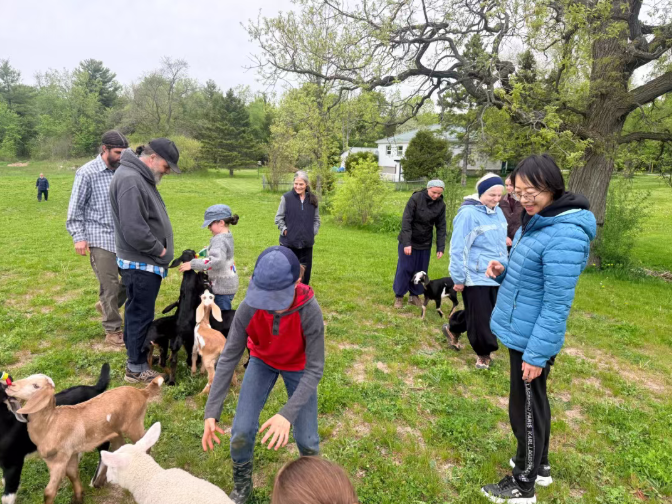
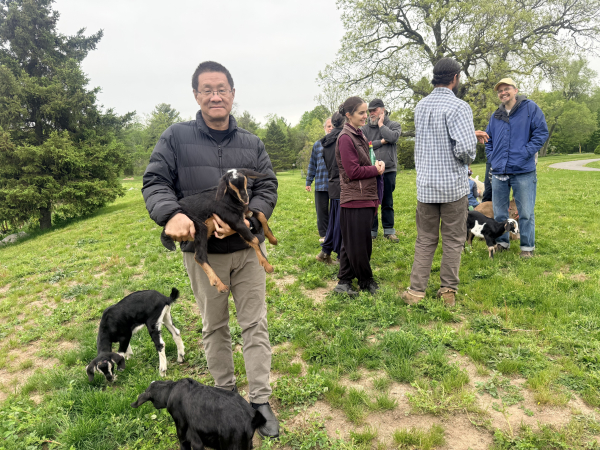
Visitors and community members with the goats in the pasture.
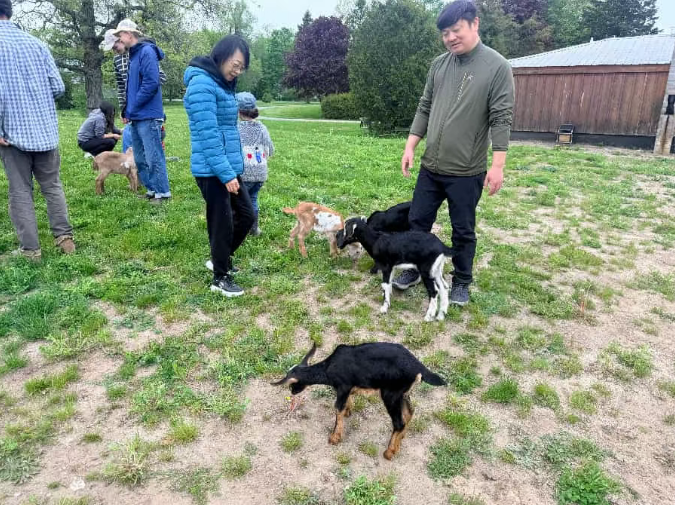
Daily contact with animals is part of ordinary farm life.
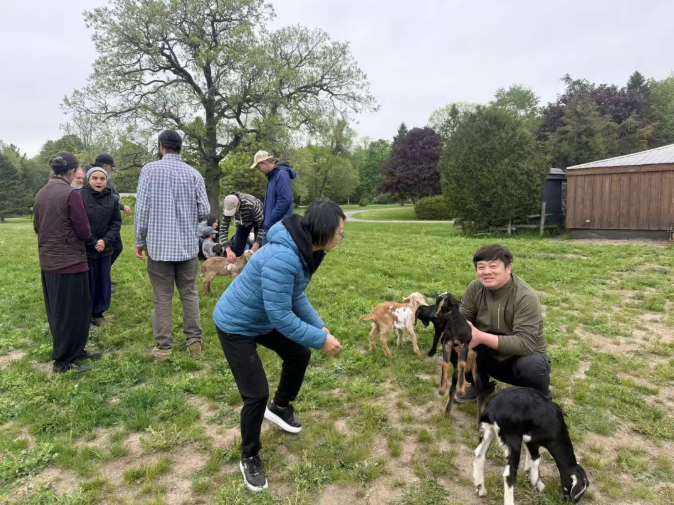
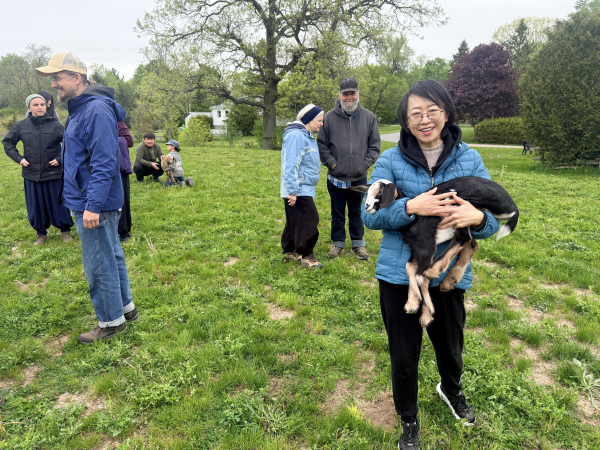
Children, guests, and community members share the same open space.
One day I spoke with the elderly woman who played the harp each morning. Though over seventy, her face radiated peace and her eyes were remarkably clear.
I asked, “Do you wake everyone like this every day?”
She smiled and nodded, gently touching the harp in her arms.
At that moment I realized that in modern society, many people her age live in nursing homes surrounded by televisions, medications, caregivers, and doctors, often visited less and less by family members.
Here, however, she still has a role.
She was still needed. She still contributed to the community. She was not someone waiting to be cared for. She was part of a family.
This became the most moving lesson of my return to the Twelve Tribes.
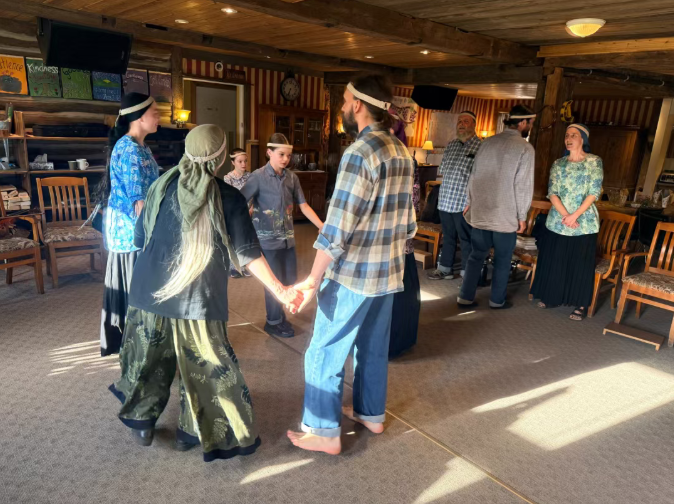
Music, dance, and worship remain intergenerational activities.
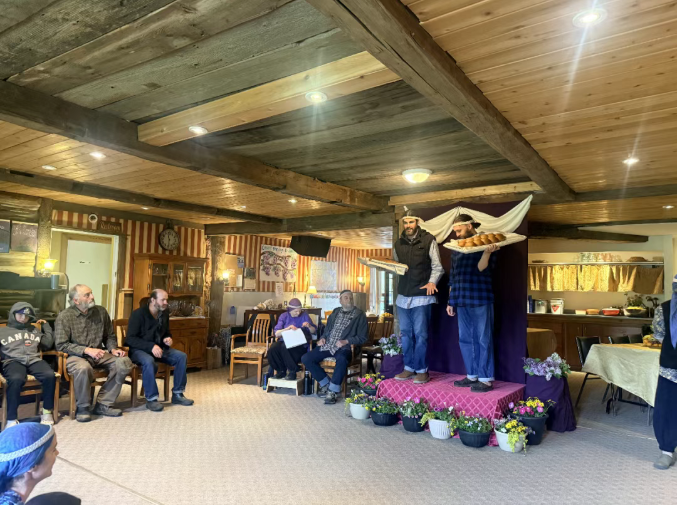
A community gathering where older and younger members participate together.
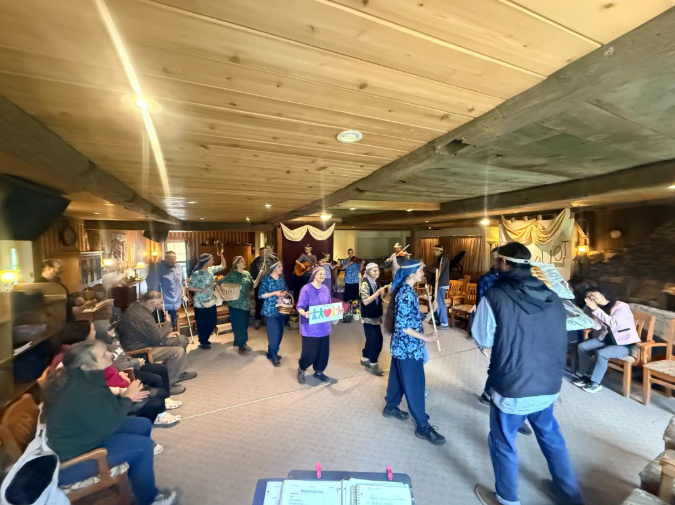
The community assembled indoors for music, worship, and conversation.
Over the years I have visited many retirement communities across North America. Some were as luxurious as five-star resorts, complete with swimming pools, fitness centers, medical teams, and abundant recreational programs. Yet something always seemed missing.
Returning to this farm helped me understand what it was:
A sense of belonging.
Modern retirement systems may solve how people live, but not necessarily why they live.
Modern retirement systems may solve the question of how people live, but not necessarily why they live.
In old age, the greatest fear may not be illness. It may be no longer being needed. No one waiting to eat with you. No one listening to your stories. No one remembering your name.
At Twelve Tribes, elderly people continue to participate in community life, help educate children, make music, worship, and work. They are not separated into places designed exclusively for seniors. They remain embedded in family, community, and human relationships.
On the day I left, I looked back at the familiar wooden sign standing quietly beside the road against a backdrop of green fields.
I realized that the greatest attraction of Twelve Tribes is not its religion or its system. It is the effort to preserve an ancient way of life in an increasingly fast, complex, and lonely world.
A way of life in which people know one another, trust one another, and need one another.
I do not believe everyone should live this way. Such communities have limitations and raise legitimate questions.
Yet they function as a mirror, reflecting what modern society lacks most.
As my car entered the highway, the farm faded into the distance.
But one image remained in my mind:
The meadow beneath the setting sun,
Children running,
Sheep returning home,
An elderly woman playing the harp,
And a long-forgotten sense of peace.
Perhaps the most important things in life have never been wealth or possessions. Perhaps they are simply having a place where someone remembers your name, waits to share dinner with you, and hopes to see you again tomorrow.
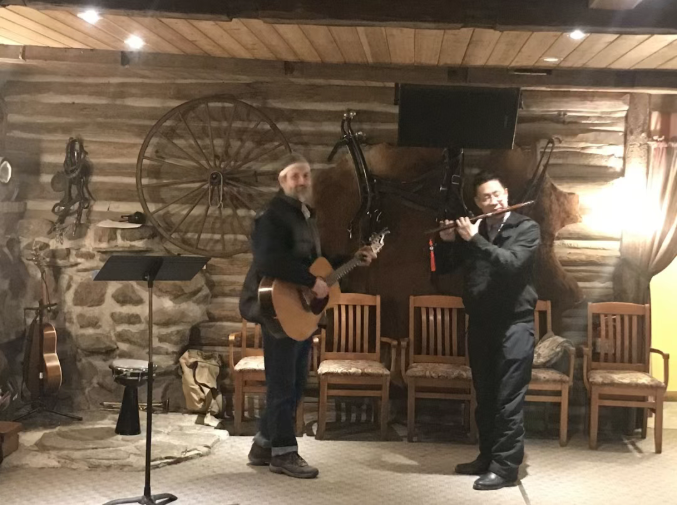
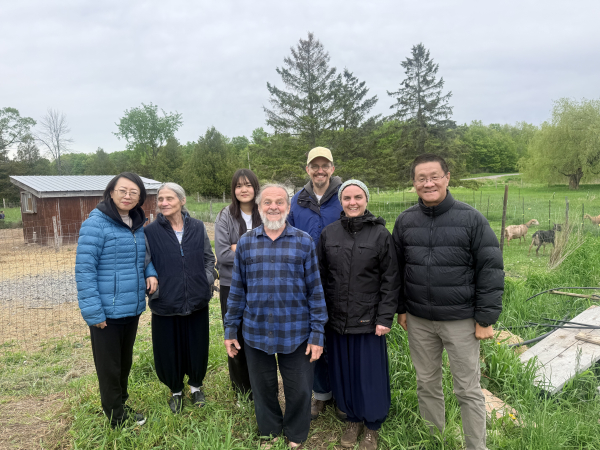
A final image of music and fellowship before departure.